
Pickwick Lake Fishing Guide — A Local Angler’s Complete Field Manual
Pickwick Lake is one of those rare fisheries that never really has an “off season.” Whether you are a weekend angler or someone who plans entire trips around water conditions and fish behavior, Pickwick consistently delivers quality fishing for bass, catfish, and a wide range of other sportfish. The lake is especially well known for producing trophy-class smallmouth bass, healthy populations of largemouth and spotted bass, and some of the biggest blue catfish in the region.
Two areas define Pickwick fishing for most anglers. The first is the Wilson Dam tailwaters, where moving water concentrates fish year-round and creates some of the best opportunities for striped bass, sauger, and catfish. The second is the warm-water discharge basin near the Colbert Fossil Plant west of Sheffield, which attracts baitfish and predators in every season.
Pickwick spans Tennessee, Alabama, and Mississippi, and a reciprocal license agreement allows anglers to fish the impounded waters with a valid sport fishing license from any of these three states, provided the regulations of the state being fished are followed. The lake stretches from Pickwick Dam at river mile 209 upstream to the Bear Creek confluence at mile 225, covering roughly 50 miles of river and reservoir and about 47,500 acres of fishable water. With numerous boat ramps and extensive bank access, it is equally friendly to boat anglers, kayak anglers, and shore fishermen.
Lake Structure and How Fish Use It
Pickwick reaches depths of approximately 85 feet, and much of its productivity comes from the way structure and current interact. Deep holes, submerged humps, old river channels, rocky shoals, underwater islands, and artificial fish attractors create a constantly shifting pattern of fish movement. Bass tend to relate to weeds, drop-offs, ledges, and current breaks, while catfish use deeper channels, gravel bars, bluffs, and submerged troughs.
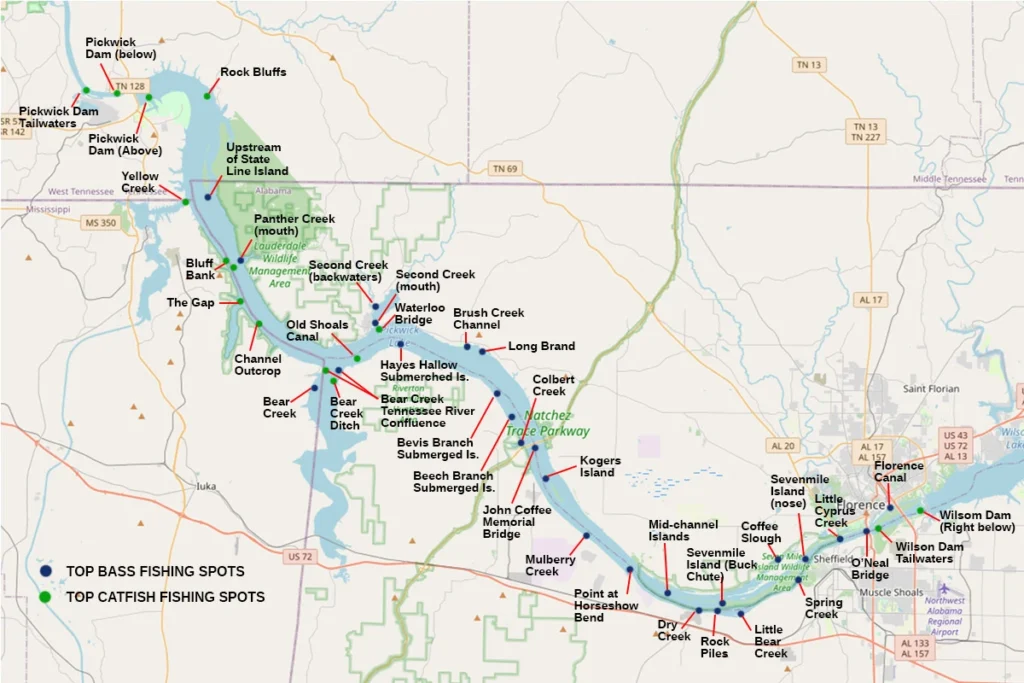
In the upper Alabama section, Pickwick behaves more like a flowing river than a lake. Here, current seams and shallow bars are prime smallmouth and largemouth habitat. Spinnerbaits, jigheads with crawfish trailers, and shad-style crankbaits fished through current breaks are especially effective.
Below Wilson Dam, the tailwaters concentrate fish in all seasons. Summer brings high numbers of channel and blue catfish, winter brings sauger moving upstream to spawn, and striped bass remain present most of the year. Fishing improves dramatically whenever the Tennessee Valley Authority opens the turbines, as the sudden flow dislodges insects and baitfish and triggers aggressive feeding.
Primary Bass Locations
The following table summarizes the most reliable bass areas on Pickwick and how anglers typically fish them:
| Area | How and Why It Produces |
|---|---|
| Upstream of State Line Island | Holds smallmouth, largemouth, and stripers year-round due to current breaks and baitfish |
| Panther Creek Mouth | Bass and catfish feed where creek meets main channel |
| Bear Creek & Confluence | Spring prespawn bass and crappie along channel edges |
| Second Creek & Mouth | Largemouth spawning grounds in spring, slower backwater |
| Kogers Island (downstream end) | Shelter from current, excellent structure for all bass species |
| Horseshoe Bend Point | Local favorite, fish move into cooler creek water in summer |
| Sevenmile Island (Chute & Nose) | Consistent baitfish presence, spinnerbaits and topwater excel |
| Florence Canal | Year-round smallmouth, peak during spring migration |
Primary Catfish Locations
Pickwick is also one of the better catfish waters in the region. Blue catfish, channel catfish, and flathead catfish all occur in good numbers.
| Area | Species and Pattern |
|---|---|
| Bear Creek Ditch | Channel and blue cats along 20 ft dropoffs |
| Old Shoals Canal | Deep hole (40–50 ft) holding feeding cats in current |
| The Gap (Camp Hollow Creek) | Mixed catfish species in deep channel |
| Bluff Banks | Channel cats spawning in rock cracks in spring |
| Wilson Dam Tailwaters | All catfish species, flatheads at night |
| Yellow Creek Mouth | Prime blue catfish water |
| Rock Bluffs (TN section) | Drift fishing for blue catfish |
What You’ll Catch at Pickwick Lake
Pickwick Lake supports one of the most diverse and productive sport fisheries in the Tennessee River system. Species range from sauger and paddlefish to multiple bass and catfish species, but the lake is best known for its consistently strong bass population — specifically largemouth bass, smallmouth bass, and spotted bass. These fish are present in high numbers and grow to significant size. Anglers fishing Pickwick regularly encounter legal-size “keepers” along with a substantial proportion of fish exceeding 15 inches, making it both a high-action and high-quality fishery.
The structure of the lake — deep channels, rocky shoals, submerged ledges, vegetation beds, current seams, and tailwater flow — creates a wide range of habitats that support seasonal movement and feeding patterns for different species. Understanding how each species relates to current, depth, cover, and seasonal temperature changes is essential for consistent success.
Largemouth Bass
Largemouth bass are abundant throughout Pickwick Lake during all seasons, with the highest quality catches occurring in the spring when fish are feeding heavily and preparing to spawn. The average largemouth weighs approximately 2.5 pounds, but trophy-class fish in the 5 to 8 pound range are a common and realistic expectation for anglers fishing the right structure at the right time. The minimum legal length for harvest is 15 inches.
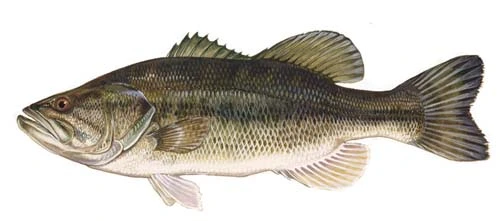
Largemouth bass in Pickwick are primarily structure-oriented fish. They hold near cover such as weed edges, submerged vegetation (especially hydrilla), shorelines, channel drop-offs, and submerged ledges adjacent to deeper water. These fish are opportunistic feeders and respond well to a broad range of presentations, including deep-diving crankbaits, shad-profile plugs, spoons, soft plastic worms, and jigs fished on Carolina rigs.
Hydrilla beds are particularly important largemouth habitat. Large bass often hold within or directly beneath these vegetation mats. Effective techniques include running topwater lures or shallow crankbaits across the surface of the grass to trigger reaction strikes, as well as allowing a lure to fall into the vegetation and then snapping it upward to imitate escaping prey. Many strikes occur at the moment the lure breaks free of the grass.
Productive largemouth areas include the rock walls at the mouth of Dry Creek, Pompey Branch, and Winn Springs, where structure, current deflection, and baitfish combine to attract feeding fish.
Smallmouth Bass
Pickwick Lake is widely regarded as one of the most consistent producers of trophy smallmouth bass in the region. Average fish exceed two pounds, and multiple fish approaching or exceeding ten pounds have been caught over the years. The combination of current, rocky structure, deep water access, and forage availability creates ideal smallmouth habitat throughout much of the lake.
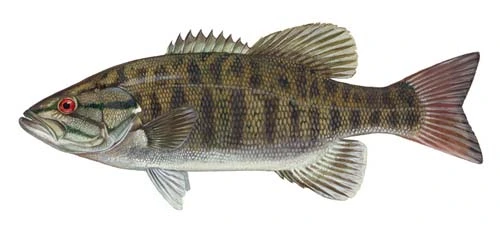
Unlike largemouth bass, smallmouth bass are more mobile and less predictable. They tend to occupy deeper water and relate strongly to current seams, rocky shoals, submerged ledges, and channel edges. Locating them often requires detailed knowledge of bottom contour or the use of high-quality sonar and mapping systems. Because they are highly sensitive to water temperature and flow, their position can change rapidly.
Night fishing for smallmouth during the warmer months is common and effective, as smallmouth feed actively under low-light conditions.
In March, smallmouth bass migrate from deep water into the shallows of the tailwaters to spawn, typically at depths of 5 to 8 feet. These fish are rarely visible, but they are present and active. After spawning, they move away from the tailwaters and disperse throughout the lake, occupying deep points, ledges, rocky shoals, islands, and embayments.
Effective presentations include spinnerbaits, wakebaits, Rat-L-Traps, shad-imitating lures, small crankbaits, and finesse jigs paired with curly-tail soft plastics. Post-spawn hotspots include the islands upstream of Dry Creek and the deep embayments on the north side of the lake just downstream from Wilson Dam. Where largemouth relate to vegetation, smallmouth prefer current and rock.
Spotted Bass
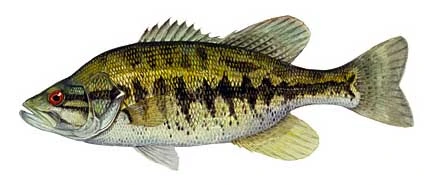
Spotted bass are present in Pickwick Lake but in significantly lower numbers than either largemouth or smallmouth bass. They tend to occupy similar habitats to smallmouth bass and are often encountered incidentally while targeting other black bass species.
Striped Bass and Hybrid Striped Bass
Striped bass are distributed throughout Pickwick Lake but are most intensively targeted in the tailwaters below Pickwick Dam. While this area lies technically outside the impounded lake itself, it is the primary location for anglers pursuing large stripers.
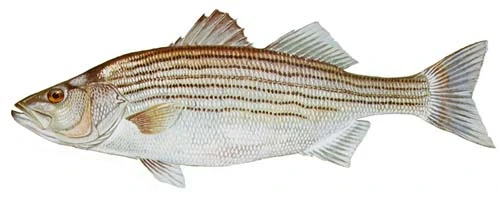
Stripers in this system can reach up to 80 pounds, though average fish range from 10 to 15 pounds and measure roughly 10 to 20 inches. These fish are present year-round, but the prime season extends from March through early November.
The most effective method is drifting live shad minnows through the tailwaters. In early March, before shad become available, anglers rely on deep-diving crankbaits and shad-profile soft plastics such as paddle-tail swimbaits or Sassy Shads. During April and May, yellowtail shad and hickory shad (skipjack) become the preferred live bait, and many anglers use small bait-catching rigs to fill their livewells.
White Bass
White bass are abundant and widespread throughout Pickwick Lake but often receive less attention than black bass. When largemouth and smallmouth fishing slows, white bass provide consistent action.
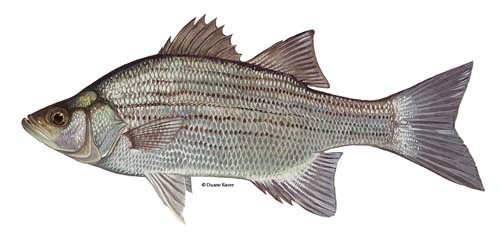
White bass strongly favor current and are most often found in the main channel, on humps, submerged mounds, and underwater ridges where shad congregate. Cast-and-retrieve techniques with spinners, shad imitations, or live minnows are effective. While light line in the 4–6 lb range is sufficient, heavier line is recommended to prevent break-offs when larger hybrid or striped bass strike.
Crappie
Pickwick supports a healthy population of both black and white crappie. Yellow Creek is a known hotspot, but crappie can be found throughout the lake from Wilson Dam to Pickwick Dam.
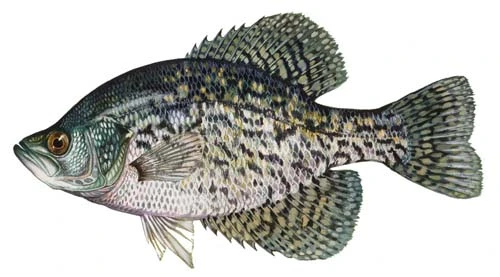
During warmer months, crappie hold at depths of 20 to 25 feet near stump fields, brush, and ledges. As winter transitions to spring and summer transitions to fall, crappie move shallow. Vertical jigging with 1/8 to 1/4 ounce jigs or tube jigs tipped with worms is highly effective. Because crappie locations shift annually, sonar and electronics are essential tools.
Channel Catfish
Channel catfish are extremely abundant, typically weighing between 1.5 and 3 pounds, with occasional fish reaching 15 pounds. They prefer shallower depths than blue or flathead catfish and are most often found in 5 to 10 feet of water during mid-summer.
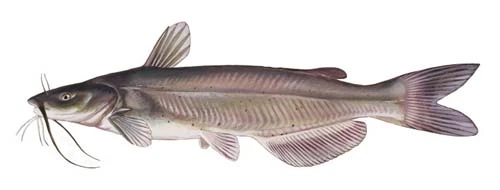
Effective techniques include bouncing a 1/0 Foley spoon tipped with shrimp or cut bait along bluff bases, as well as fishing chicken liver and commercial stink baits.
Blue Catfish
Blue catfish are the most sought-after catfish species in Pickwick. Average fish weigh 10 to 15 pounds, and fish over 50 pounds are common. The lake record exceeds 111 pounds.
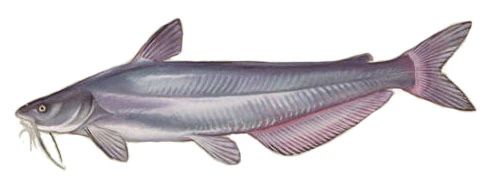
Blue catfish are found on flats, mud bottoms, gravel bars, ledges, and deep channels depending on season. Concentrations are highest between the Mississippi–Tennessee state line and Pickwick Dam. Three-way rigs with 2–3 foot leaders and 5/0–7/0 circle hooks baited with skipjack, shad, shrimp, chicken liver, shiners, or nightcrawlers are standard.
Flathead Catfish
Flathead catfish are less common than channel or blue catfish but remain abundant. The best areas are the headwaters behind Wilson Dam and the tailwaters below Pickwick Dam.
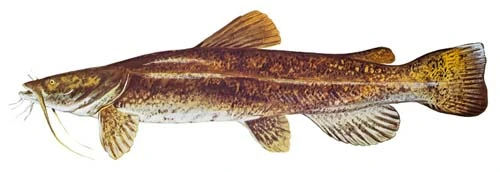
Flatheads are primarily nocturnal feeders. The most effective method is fishing live baitfish such as bluegill or gizzard shad under slip bobbers at depths of 20 to 25 feet after dam operations shut down around 11 p.m.
Sauger
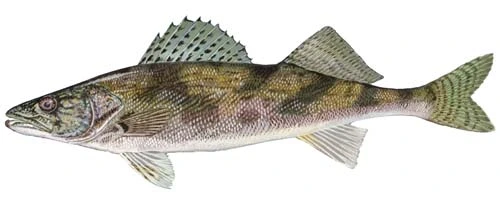
Sauger are scattered throughout the lake but are best targeted during their winter migration from December through February in the Wilson Dam tailwaters. Heavy jigs tipped with minnows fished along the bottom are effective. Sauger are also present in the tailwaters of Pickwick Dam in Kentucky Lake.
Sunfish
Bluegill and redear sunfish dominate the sunfish population, with occasional redbreast sunfish also present. These fish spawn on shallow flats in spring and remain near cover the rest of the year. Average bluegill weigh just over one-third of a pound, while redear average about half a pound.
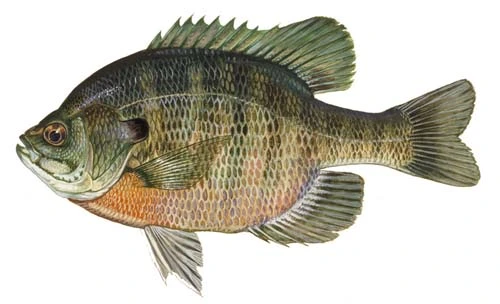
The best fishing occurs from late March through June using worms, crickets, waxworms, small jigs, or spinner-style lures such as Road Runners. Redear have a daily limit of 20 fish; other sunfish species have no length or creel limit.
Rare Species
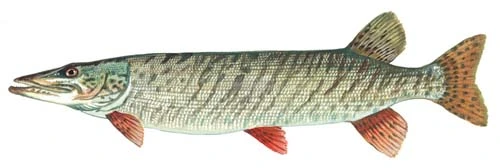
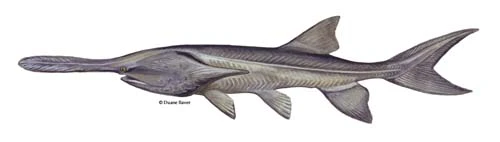
Muskellunge and paddlefish have both produced Alabama state records in the Wilson Dam tailwaters, but neither species is commonly caught today. Muskellunge are no longer stocked, and paddlefish catches are rare and sporadic.
Effective Baits and Techniques
| Species | Proven Presentations |
|---|---|
| Smallmouth Bass | Spinnerbaits, crankbaits, finesse jigs, shad imitations |
| Largemouth Bass | Deep crankbaits, lipless cranks, plastics, jigs |
| Striped Bass | Live shad, swimbaits, deep diving crankbaits |
| White Bass | Spinners, shad imitations, minnows |
| Crappie | 1/8–1/4 oz jigs, tube jigs with worm |
| Blue Catfish | Skipjack, shad, shrimp on 3-way or circle hook rigs |
| Flathead Catfish | Live bluegill or gizzard shad at night |
| Sunfish | Worms, crickets, small jigs |
Fishing Regulations Summary
Pickwick operates under a reciprocal license agreement between Alabama, Mississippi, and Tennessee, but anglers must follow the regulations of the state in which they are fishing.
| Species | Tennessee | Mississippi | Alabama |
|---|---|---|---|
| Black Bass | 5/day combined, 15″ min | 10/day combined, 15″ min | 10/day combined, max 5 smallmouth |
| Crappie | 30/day, 9″ min | 30/day, 9″ min | 30/day, 9″ min |
| Catfish >34″ | 1/day | 1/day | 1/day |
| Striped Bass | 2/day | 6/day, 15″ min | 15/day, max 5 over 22″ |
| Sauger | 10/day, 15″ min | 10/day | 5/day, 15″ min |
| Paddlefish | 2/day, no culling | 0 harvest | 0 harvest |
Final Thoughts
Pickwick Lake is not just a place where you can catch fish — it is a system you learn over time. Understanding current, seasonal movement, structure, and forage patterns is what separates occasional success from consistently productive trips. For anglers willing to read the water and adapt their approach, Pickwick remains one of the most rewarding fisheries in the Tennessee River system.
If you plan your trip around water flow, temperature, and seasonal behavior rather than just calendar dates, Pickwick will almost always have fish willing to bite.2